
Overview
What Is Vitiligo?
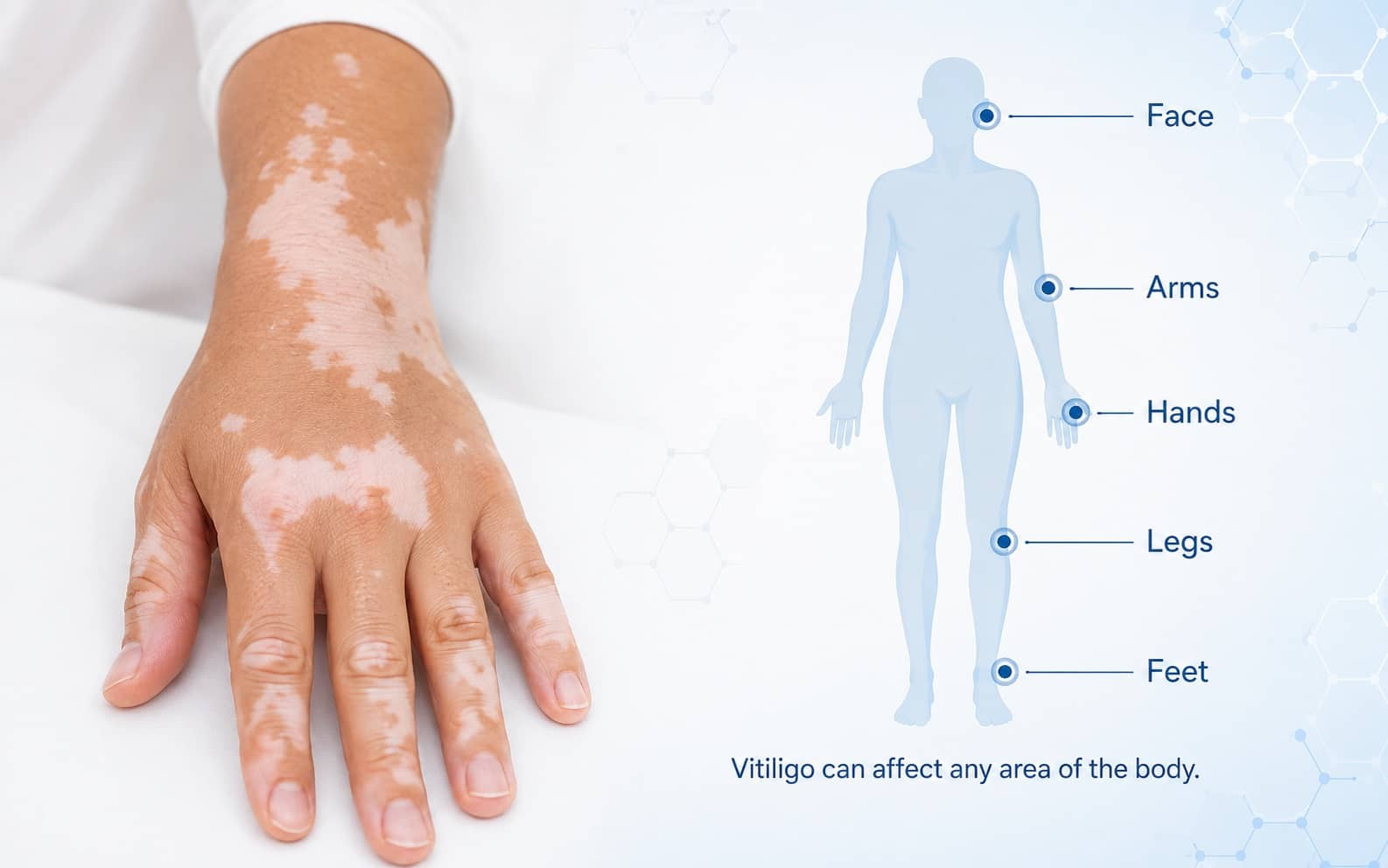
Vitiligo is a chronic skin condition that causes the loss of melanin, resulting in well-defined white patches on the skin. It can affect any area of the body and varies from person to person. Although vitiligo is not contagious or life-threatening, early treatment may help slow progression and encourage repigmentation.
Common Symptoms of Vitiligo
Recognize the early signs to seek timely care and management.
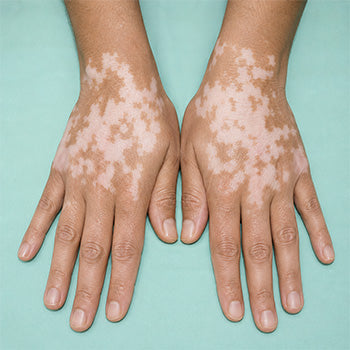
White Patches
Clearly defined areas of pigment loss.
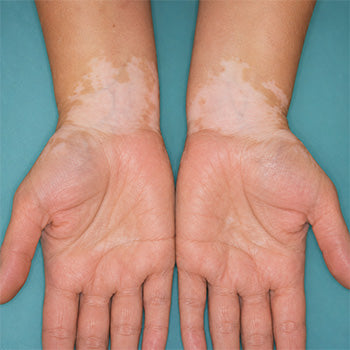
Symmetry
Often develops on both sides of the body.
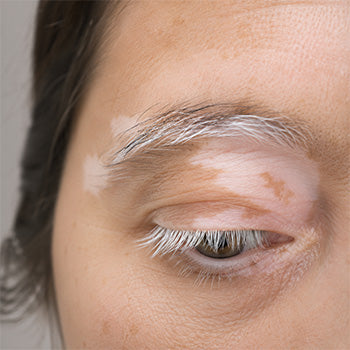
White Hair
Hair within affected areas may lose color.
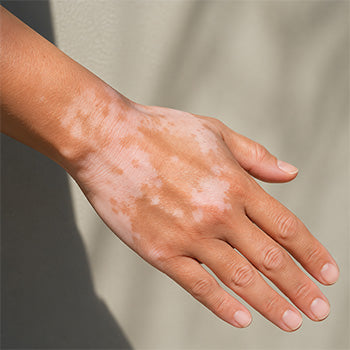
Sun Sensitivity
Depigmented skin is more vulnerable to UV exposure.
How UVB Light Therapy for Vitiligo Works
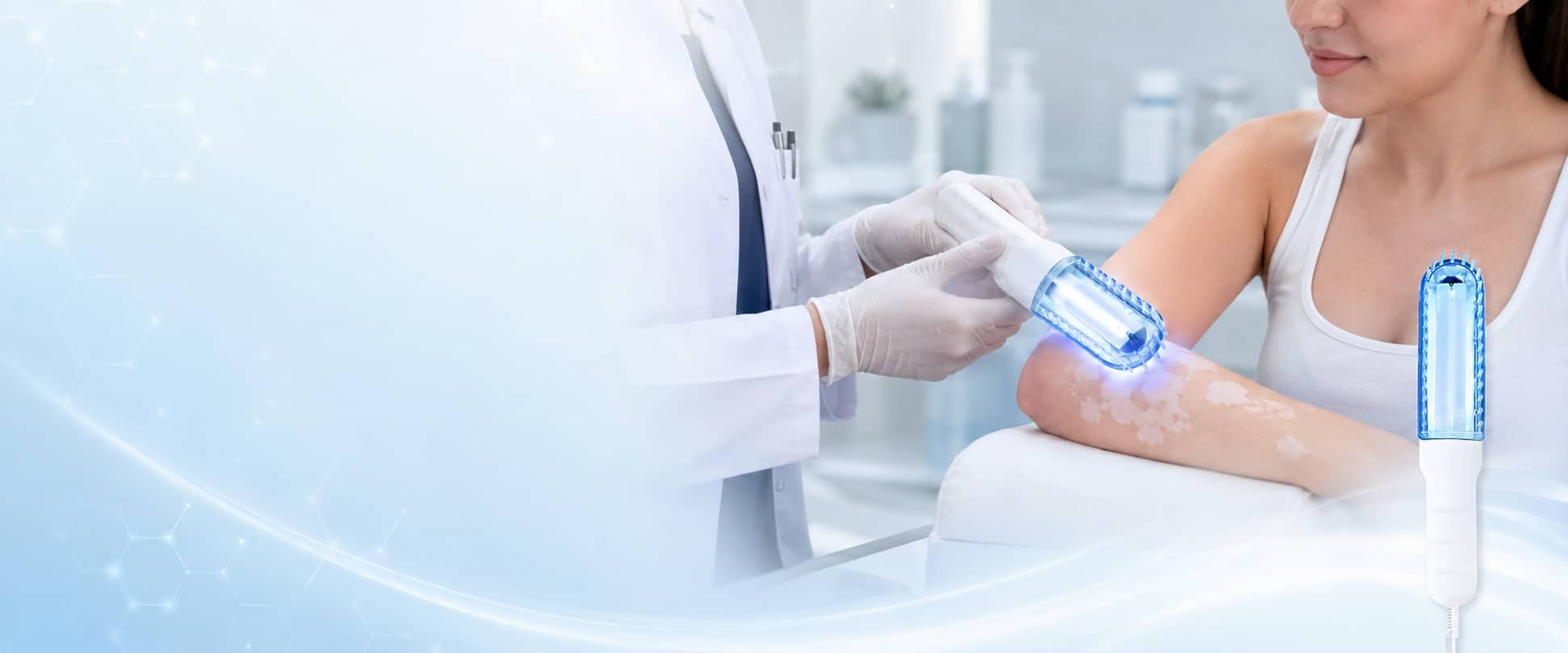
UVB light therapy for vitiligo exposes affected skin to controlled ultraviolet B light. Depending on the size and location of the patches, treatment may involve a larger home phototherapy lamp or a portable UV light designed for targeted areas. Treatment time and frequency should be determined with guidance from a qualified healthcare professional.
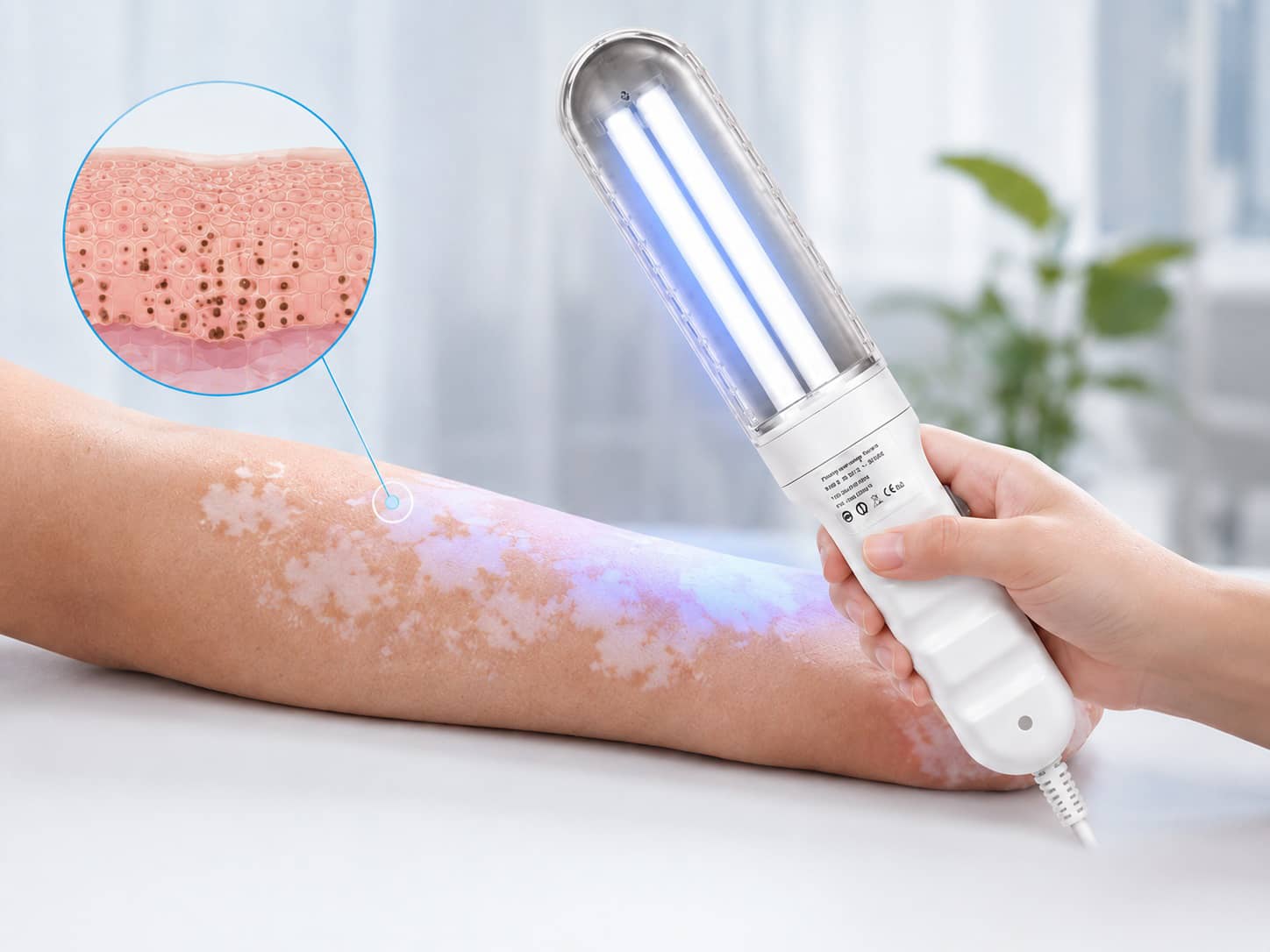
- Encourages repigmentation
- Targets affected areas precisely
- Drug-free treatment option
- Suitable for long-term management
- Convenient home treatment
- Clinically recognized approach
Choosing a Home UVB Lamp for Vitiligo
Clinically designed devices to support your vitiligo treatment journey.
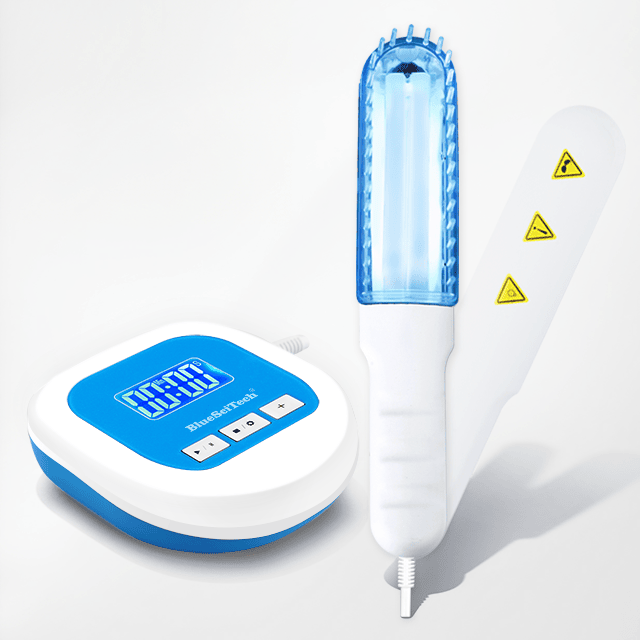
Best for large areas
311 nm NB-UVB home phototherapy device
Narrowband UVB for widespread vitiligo patches. Clinically established for home use.
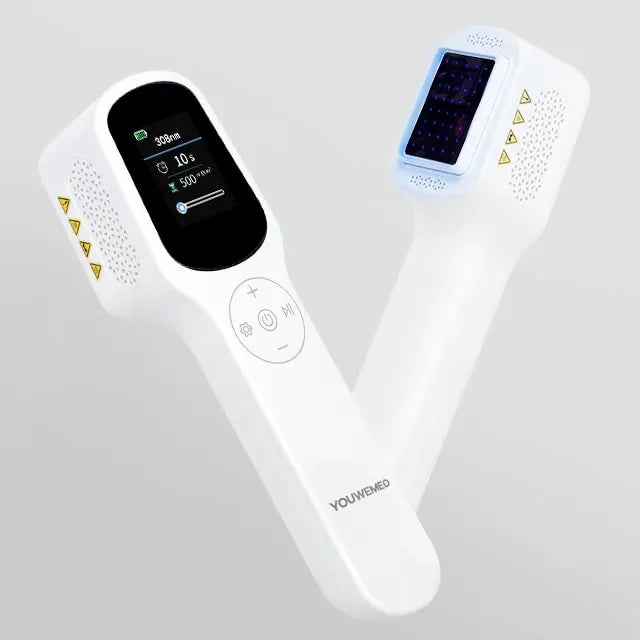
Best for small areas
308nm Targeted UV Device
Precision phototherapy for localized patches with high-intensity 308nm wavelength.
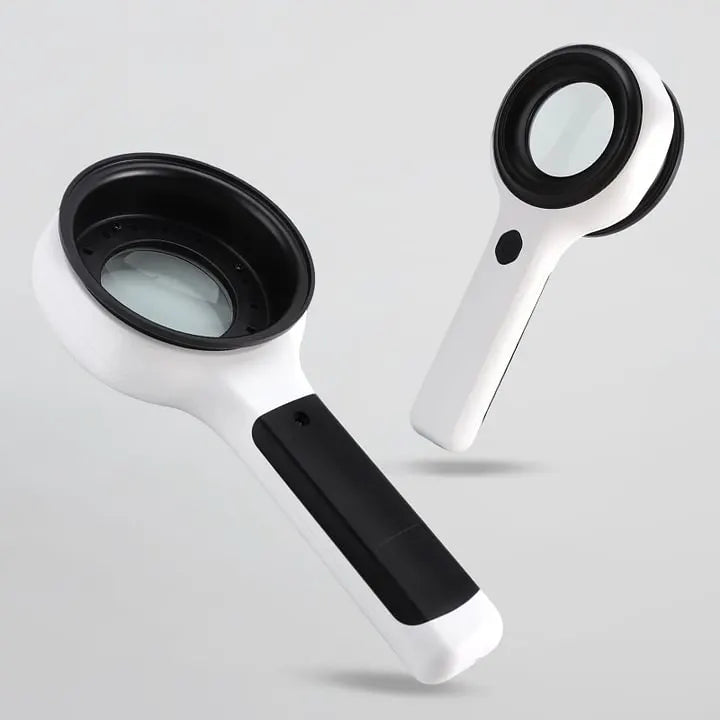
Diagnostic aid
Wood's Lamp for Skin Examination
Professional UV lamp for detecting and monitoring depigmented patches.
Compare UVB Phototherapy Devices
← Swipe horizontally to compare →
| Product | 311nm NB-UVB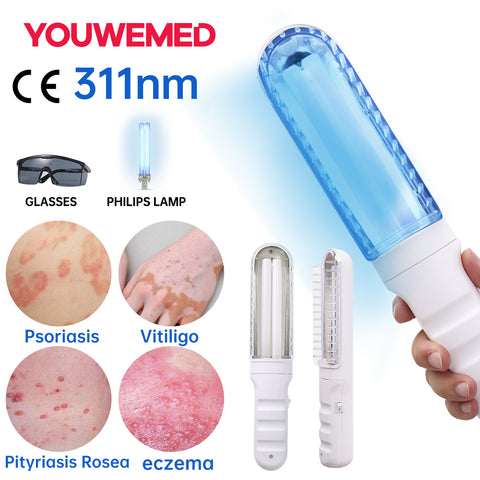 BU-1S
BU-1SFrom$179
| 311nm NB-UVB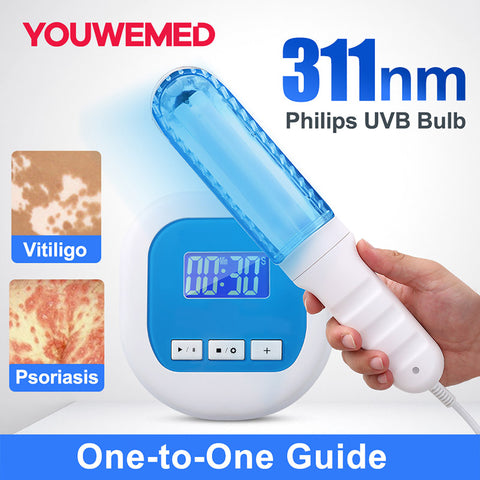 BU-1
BU-1From$199
| 311nm NB-UVB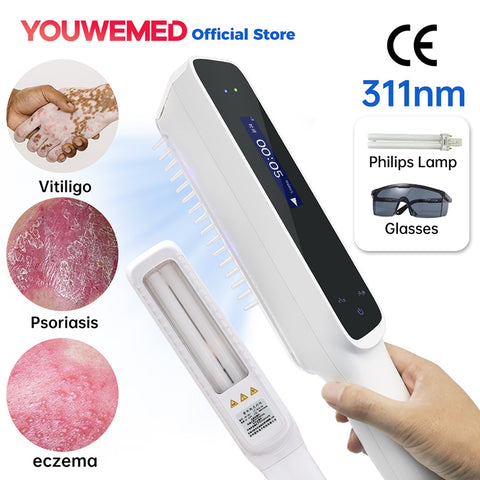 BU-10
BU-10From$279
| 308nm LED UVB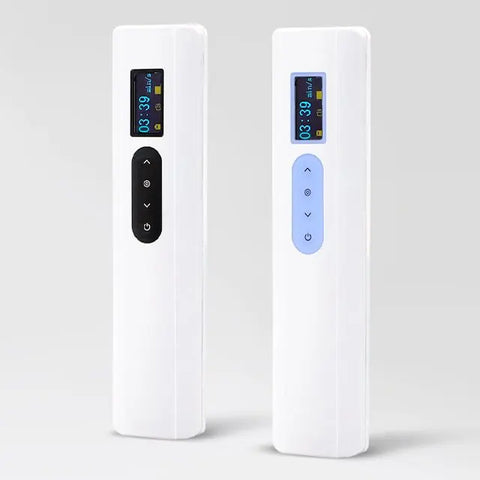 UV308A
From$199
| 308nm LED UVB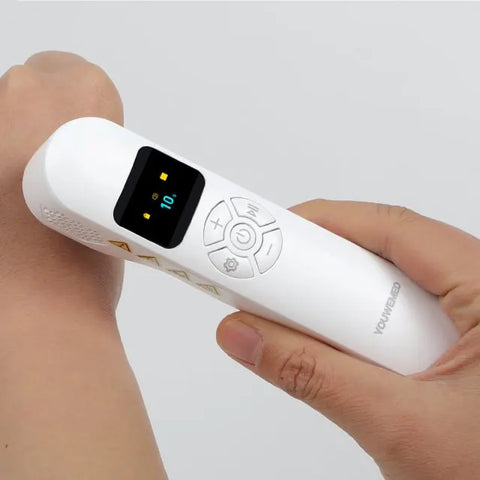 UV308B
From$369
| 308nm LED UVB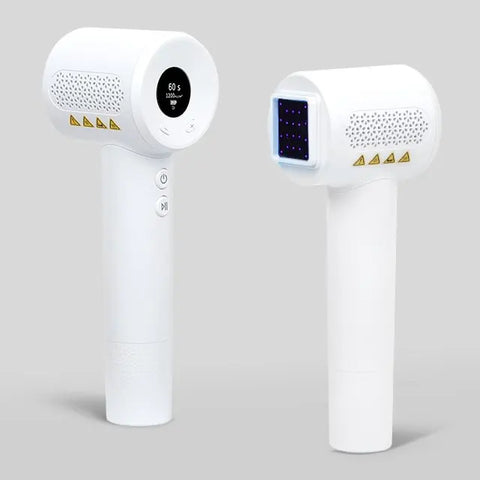 UV308E
From$469
| 308nm LED UVB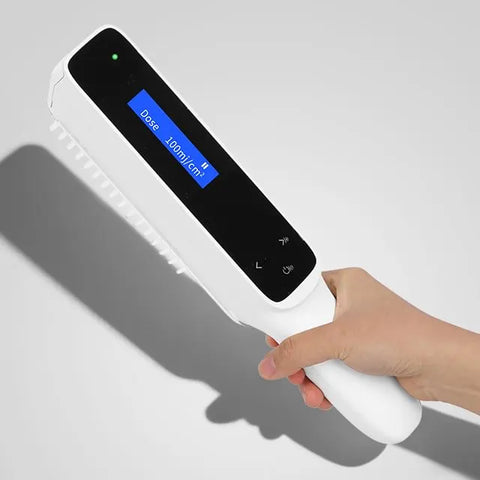 UV308H4
From$399
| 308nm LED UVB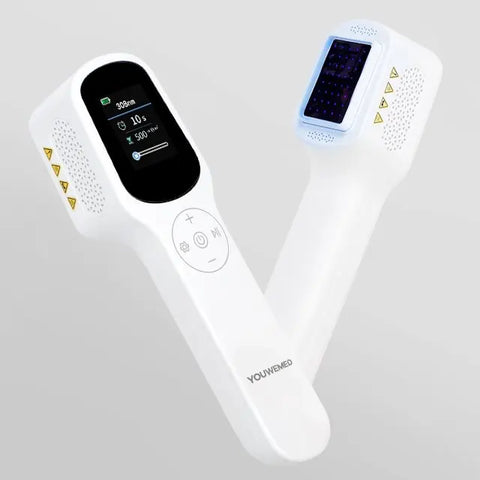 UV308V
From$569
|
|---|---|---|---|---|---|---|---|---|
| Wavelength |
311nm NB-UVB |
311nm NB-UVB |
311nm NB-UVB |
308nm LED UVB |
308nm LED UVB |
308nm LED UVB |
308nm LED UVB |
308nm LED UVB |
| Light Source |
Philips PL-S
9W/01/2P |
Philips PL-S
9W/01/2P |
Philips
UVB Lamp | LED | LED | LED | LED | LED |
| Light Area | 48 cm² | 48 cm² | 48 cm² | 2 cm² | 4 cm² | 10 cm² | 16 cm² | 22 cm² |
| LED / Output | — | — | — | 6 / 8 LEDs | 8 LEDs | 20 / 30 LEDs | 33 LEDs | 40 LEDs |
| UV Intensity | — | — | — | 20–50
mW/cm² | 25–35
mW/cm² | 40–60
mW/cm² | 35
mW/cm² | 40–50
mW/cm² |
| Control |
One-button Instant start |
Button + Timer Digital timer |
OLED + Buttons Time & Dose |
Time & Dose Display |
Time & Dose Display |
Time & Dose Display |
OLED + Voice Time & Dose |
OLED Time & Dose |
| Weight | 0.48 kg | 1.28 kg | 1.25 kg | 0.07 kg | 0.12 kg | 0.30 kg | 0.56 kg | 0.44 kg |
| Easy Choice | Simplest 311nm option | 311nm + built-in timer | 311nm + OLED control | Smallest target area | Compact + more coverage | Higher output + medium area | Wide area + light comb | Largest 308nm coverage |
| Learn More | View BU-1S | View BU-1 | View BU-10 | View 308A | View 308B | View 308E | View 308H4 | View 308V |
Before & After
Visible repigmentation over time with consistent UV phototherapy.
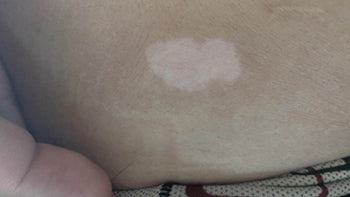
Baseline
Initial depigmented patches
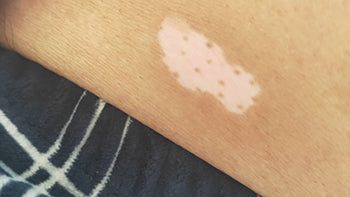
Early Response
Subtle repigmentation begins
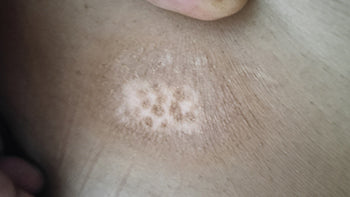
Progressive
Noticeable pigment recovery
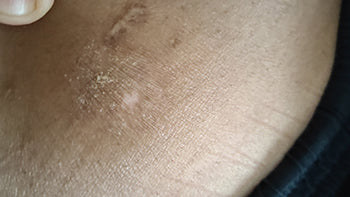
Significant Improvement
Clear repigmentation visible
* Individual results may vary. Consistent use under professional guidance is recommended.
Frequently Asked Questions About UVB Light Therapy for Vitiligo
This information is for general educational purposes and does not replace professional medical advice.
Can I use UVB light therapy for vitiligo at home?
Home UVB light therapy for vitiligo may be suitable for some patients, particularly when regular clinic visits are inconvenient. Treatment should be planned with a dermatologist, as exposure time and frequency vary by skin type, treatment area and individual response.
Use only medical phototherapy equipment, follow the device instructions and wear the recommended protection. Do not use tanning lamps or general-purpose UV lamps as substitutes.
What type of UV lamp is used for vitiligo?
Narrowband UVB is commonly used for vitiligo phototherapy. Larger home phototherapy devices often use approximately 311 nm NB-UVB and may suit multiple or larger treatment areas.
Targeted 308 nm devices are generally designed for smaller, localized patches. The right UV lamp for vitiligo depends on the treatment area, skin type and your dermatologist’s treatment plan.
Is a handheld UV lamp suitable for vitiligo?
A handheld UV lamp for vitiligo may be useful for small, localized patches on areas such as the face, hands, arms or legs. Its smaller treatment window allows UVB light to be directed more precisely.
However, handheld devices may be less practical for widespread vitiligo. Ask a dermatologist whether targeted home phototherapy is suitable for you and follow the recommended treatment schedule.
What is the difference between portable and full-size home phototherapy devices?
Portable UV light devices are compact and mainly designed for treating small or isolated patches. They are easier to store, carry and position, but treating multiple areas may take longer.
Full-size home phototherapy devices cover larger areas and may be more practical for widespread vitiligo. Your choice should consider treatment area, wavelength, safety controls, portability and professional guidance.
How do I choose a phototherapy lamp for vitiligo?
Consider the following factors when choosing a phototherapy lamp for vitiligo:
· Size and location of the treatment area
· 311 nm NB-UVB or targeted 308 nm wavelength
· Timer or dose-control functions
· Portability and ease of use
· Safety instructions and protective equipment
· Warranty and technical support
· Your dermatologist’s treatment plan
Do not choose a device based only on price or power. Treatment time and UVB dose should be determined individually.
Can vitiligo be cured?
There is currently no permanent cure, but treatment may help restore pigmentation and slow progression for many patients.
Does UV phototherapy work?
NB-UVB phototherapy is widely used in dermatology and is considered a standard treatment option for many people with vitiligo.
How long does treatment take?
Visible improvement often requires several weeks to months of consistent treatment, depending on individual response.
Is vitiligo contagious?
No. Vitiligo cannot be spread through physical contact.