
BU-10 UVB Phototherapy Lamp | 311nm Narrow Band | YOUWEMED


BU-10 UVB Phototherapy Lamp | 311nm Narrow Band | YOUWEMED


En stock
Features


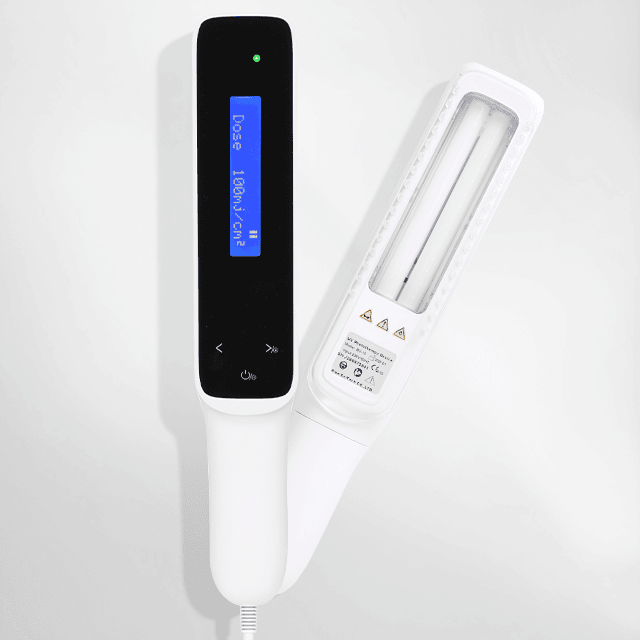
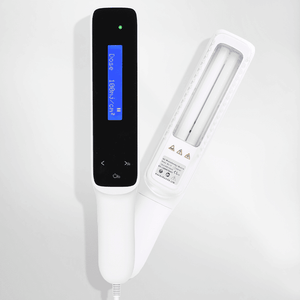
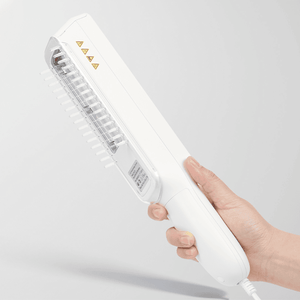
The YOUWEMED Handheld UVB 311nm Lamp delivers the same narrowband UVB therapy trusted in dermatology clinics—now available for safe, effective use at home. Designed for psoriasis, vitiligo, and eczema, it emits a precise 311nm wavelength that targets affected skin without unnecessary UV exposure.
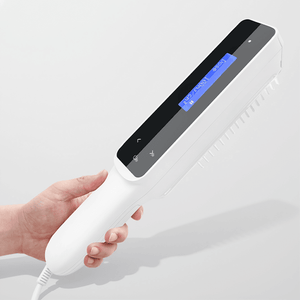
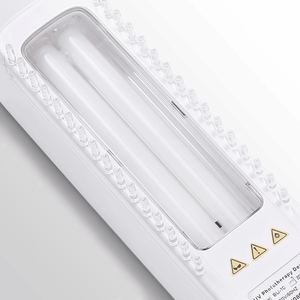
Lightweight, portable, and easy to operate, it comes with a Philips UVB tube and a built‑in microcomputer timer for accurate dose control, allowing you to follow a regular treatment plan on your own schedule.
While simple enough for daily use, children and individuals with sensitive conditions should always consult a healthcare provider before starting treatment.
| Product Model | BU-10 |
| Light Source | Philips Specialty UVB Tube (NB-UVB) |
| Wavelength Range | 311nm ± 2nm |
| Treatment Mode | Independent NB-UVB Treatment |
| Timer Range | Time and Dosage Modes Can Be Switched According to Needs |
| Display | OLED Touchscreen |
| Protection Rating | Dustproof & Waterproof (Home Grade) |
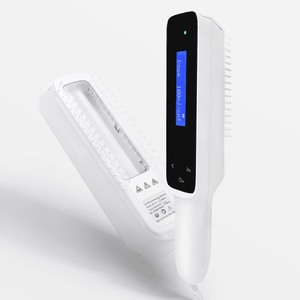
| Special Design | Lamp Comb Attachment (for Scalp Treatment) |
| Applicable Conditions | Vitiligo, Psoriasis, Pityriasis Rosea, Eczema |
✅ Indications
Vitiligo, Psoriasis, Pityriasis Rosea, Eczema (under physician guidance).
⚠️ Important Safety Precautions
- Always wear protective eyewear during treatment. Do not look directly at the UV light.
- Shield male genital area with opaque cloth.
- Avoid photosensitizing foods (figs, parsley, sour orange) and extra sun exposure during treatment.
- Recommended to treat in the evening to avoid additional UV exposure.
- Protect surrounding healthy skin with sunscreen or opaque material.
⚠️ Relative Contraindications (require physician supervision): Cataracts, family history of melanoma, liver dysfunction, prior arsenic or radiation therapy.
💡 General Advice
- Consistent long-term treatment (at least 3 months) is recommended. After about 4 months, pause for 2–4 weeks.
- Avoid trauma, especially during progressive stages.
- Use with caution in infants; PUVA not recommended.
📋 Before Treatment
Clean the treatment area and dry thoroughly. For psoriasis, a 15-20 minute warm bath is recommended to remove scales.
⏱️ Initial Treatment
Start with 30 seconds for adults (15 seconds for children). If no redness or mild tenderness appears the next day, increase time by 10–15 seconds each session until a light pink erythema appears. Then maintain that dose and treat every other day.
📅 Treatment Frequency & Duration
Generally 3–4 times per week (every other day). A significant improvement is often seen after 4 weeks. It is recommended to continue for at least 3 months, then pause for 2–4 weeks after 4 months of treatment.
📏 Irradiation Distance
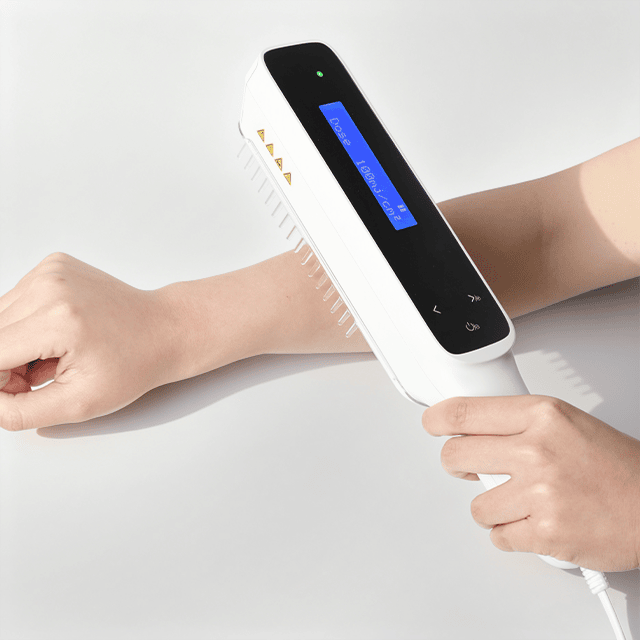
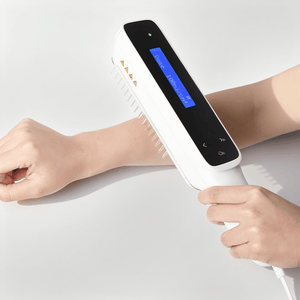
Keep lamp 1–3 cm from the skin. The built‑in lamp comb attachment automatically sets the correct distance for scalp treatment.
🌿 Additional Notes
- Avoid additional sunlight exposure; evening treatment is preferred.
- Do not consume photosensitizing foods (figs, parsley, sour orange, wild vegetables).
- Moisturize skin if itching or dryness occurs; usually no need to stop treatment.
🔥 Erythema / Redness
Generally resolves on its own. After redness completely fades, reduce dose or treatment time before resuming.
Mild: Apply cold compress for 30 minutes, then aloe vera gel or burn ointment.
Severe: Stop treatment and consult a doctor. Reduce dose when restarting.
😖 Pruritus / Dry Skin
Use moisturizers and anti‑itch creams. Avoid soaps during bathing. Usually no need to stop treatment.
🎨 Hyperpigmentation
All patients experience some degree of pigmentation. It gradually returns to normal skin color 1–3 months after stopping phototherapy. No special treatment required.
💡 General Notes on Side Effects
- If obvious swelling and pain occur after irradiation, no special treatment is needed; it will resolve spontaneously. Resume treatment with reduced time after erythema disappears completely.
- Always follow the principle of gradual dose increase to minimize side effects.
How to use
- Clean & protect – Clean the treatment area (warm bath for psoriasis to remove scales) and put on protective eyewear.
- Plug in – Connect the device to power.
- Set time – Use the timer to set the exposure time – start with 30s for adults, 15s for children, or follow your healthcare provider's recommended dose.
- Irradiate – Hold the lamp 1–3 cm from the lesion (use the comb for scalp), press start, and expose the area.
- Adjust & aftercare – Next day, if no redness or mild tenderness, increase time by 10–15s; if light pink erythema appears, keep that dose and treat every other day. Afterwards, apply moisturiser if needed and avoid extra sun exposure on the treated area.
Optical Performance & Quality
Pure
Peak wavelength: 311nm
No other spectrum light
Stable
Stable output ensures to receive the accurate irradiation
Uniform
Uniform UV output, due to precise optical system, it allows the affected area to receive the same dose


Pure
Peak wavelength: 311nm
No other spectrum light
Stable
Stable output ensures to receive the accurate irradiation
Uniform
Uniform UV output, due to precise optical system, it allows the affected area to receive the same dose
311nm UV Phototherapy Device Series
Three Advanced Solutions, One Powerful Purpose: Targeted Relief. Safer Care. Better Outcomes.

BU-1S 311nm UVB Phototherapy Instrument | YOUWEMED
- Weight: 0.81 kg
- Interface: Button Control
- Irradiation Area: 48 cm²
- Key Feature: Lightweight, portable
- Includes: MED Plate, Ballast, Philips Lamp, Comb, Pouch

BU-1 Handheld UVB Phototherapy Lamp Timer | 311nm Narrow Band | YOUWEMED
- Weight: 1.28 kg
- Interface: Button Control
- Irradiation Area: 48 cm²
- Key Feature: LCD timer display
- Includes: MED Plate, Ballast, Timer, Philips Lamp, Comb

BU-10 UVB Phototherapy Lamp | 311nm Narrow Band | YOUWEMED
- Weight: 1.25 kg
- Interface: Touch Screen
- Irradiation Area: 48 cm²
- Key Feature: Modern touch screen
- Includes: MED Plate, Ballast, Philips Lamp, Comb, Pouch
Real Patient Results
See how our phototherapy device has helped real people


Teenage Back – Vitiligo
Before → After: significant repigmentation achieved


Adult Male Waist – Psoriasis
1 month → 3 months: scaling completely resolved


Child's Foot – Vitiligo
Pigmentation significantly restored after treatment
FAQs
You have questions, we have answers.
What is UVB light therapy good for?
This therapy is commonly employed for conditions such as psoriasis, vitiligo, and eczema. During the treatment, the affected skin is exposed to UVB light for a specific duration, helping to slow the rapid growth of skin cells, reduce inflammation, and promote healing.
Does light affect vitiligo?
The core principle of the ultraviolet phototherapy device is to use specific wavelengths of ultraviolet light (mainly narrow-band medium wave ultraviolet NB-UVB) to regulate the immune response and cell growth in the skin. For vitiligo, UVB (especially NB-UVB) can stimulate the activity of residual melanocytes in hair follicles and skin, promote their proliferation and migration, and produce melanin, gradually causing the white spot area to discolor.
What is an UVB lamp used for?
The main use of UVB lamps is as phototherapy lamp, meaning treating skin diseases with light. The diseases UV-B lamps treat are psoriasis, vitiligo, lichen planus, atopic dermatitis (eczema), and other skin diseases. Thousands of dermatology clinics around the world treat skin ailments using UV-B lamps.
Is UVB light harmful to humans?
UVB penetrates and damages the outermost layers of your skin. Overexposure causes suntan, sunburn and, in severe cases, blistering. After stopping the irradiation, the metabolism will return to normal skin color within 1-3 months. If you are worried about the skin turning black, you can cover the normal skin with a blackout cloth/opaque cotton cloth, or apply sunscreen (SPF30 or above).
Does UVB light make vitamin D?
Sure, but this is only a secondary and accompanying physiological effect during its treatment process, rather than the main therapeutic goal. The ultraviolet band emitted by medical phototherapy devices (especially NB-UVB, peak wavelength 311nm) precisely covers the effective band for synthesizing vitamin D. Therefore, during phototherapy, the skin does indeed synthesize vitamin D synchronously.